If you are trying to learn Spanish you know that practice is key. And you also know that life is hectic and it is hard enough to find the time to come to class once a week. How are you supposed to find the time to search for other resources? Fear not! We are here to help. We will be here once a month with easy ideas on how to practice Spanish at home.
There is a wealth of research supporting the use of music when learning a new language. Here are a few of the reasons why it is such a great tool:
It evokes emotions. This makes language learning memorable and motivating
It engages the brain. There are many cognitive benefits to listening to and learning music
It helps with pronunciation. Music includes features such as individual sounds, connected speech, word stress, weak vowel sounds and intonation
It helps you increase your vocabulary. The repetition contained in songs is a very powerful tool to help you memorize words
This month we want to challenge you to learn a new song in Spanish! You can pick any song that appeals to you, or if you don’t want to spend time searching and hit the ground running, you can pick the one we have selected for you below.
We would love to hear how the process goes! Share in the comments
For our younger learners –
For our adult learners (follow along with the lyrics here) –
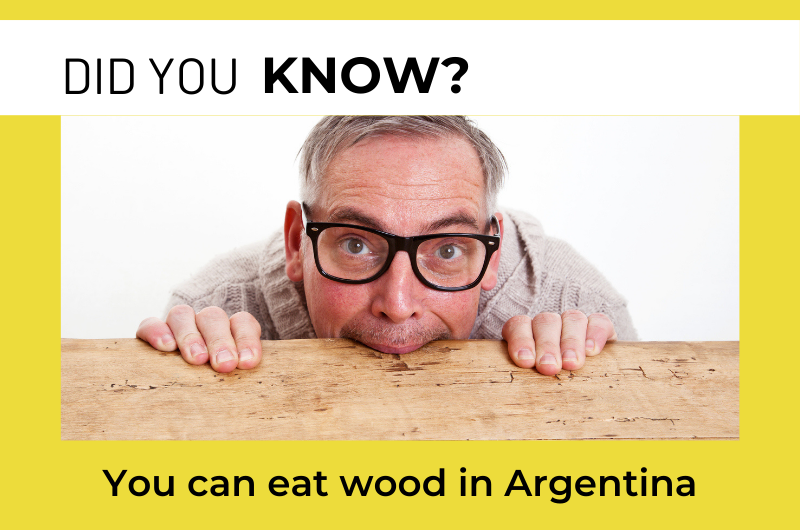
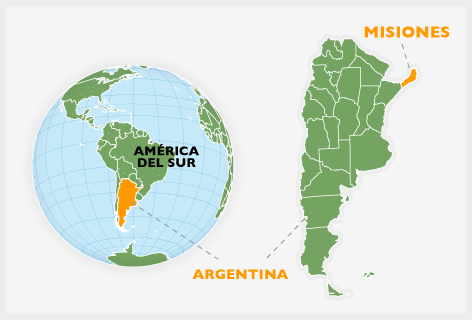
In the northern region of Misiones, Argentina, you can find the yacaratiá tree, the only edible tree in the world. Unlike other trees, the yacaratiá has a very low concentration of cellulose and a very high concentration of water. This combination makes it possible for its wood to be safe for human consumption.
In the early 90s Roberto Pascutti, a forest engineer, found a text from 1870 where it was documented that the guaraníes, the indigenous population, used to eat a very large species of larvae that grew in rotting yacaratiá trees. Pascutti deducted that if these larvae were able to grow in this type of tree, it must have been due to its great dietary properties. And he was right, yacaratiá’s wood is very rich in minerals (especially magnesium), vitamins and fibers.
Pascutti developed a method to process the wood and make it appealing for human consumption. Nowadays it can be eaten as a steak (filete), smoked (ahumado), barbecued (braseado) or mixed with sweeteners such as honey in dessert (postre) form. Its flavor is thought to be reminiscent of that of chesnuts.
Nowadays you can only taste this interesting food in Argentina, so if any readers find their way there, please share with us how it tastes!
Do you know of any other unique culinary experiences? Share with us in the comments!