
LEVELS EXPLAINED
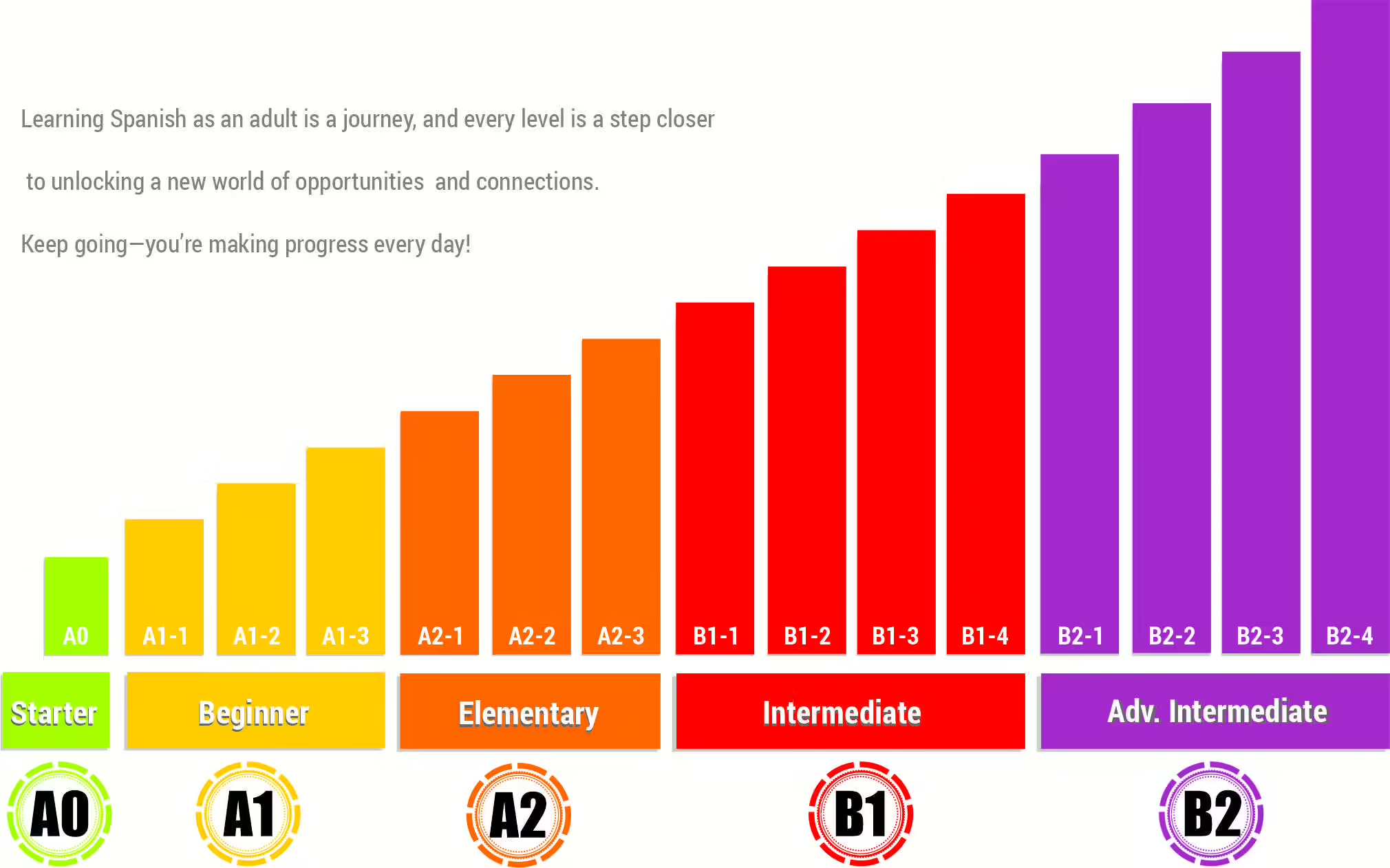
Our adult courses are organized following the official Common European Framework Reference (CEFR). The CEFR is an international standard for describing language ability on a six-point scale, from A1 for beginners, up to C2 for those that have mastered the language. Here at Uno1 Dos2 Tres3 we have added an unofficial A0 level or Starters, for those that are starting from scratch. Scroll down this page and find out about all the amazing things you will be able to do at the end of each level.
Not sure about your level? Take our assessments and find out.
AT THE END OF EACH LEVEL
A0 STARTER
A1-1 BEGINNER
A1-2 BEGINNER
A1-3 BEGINNER
A2 ELEMENTARY
I can express feelings and pain. I can have conversations in a supermarket and a restaurant, and I can explain health problems to the doctor. I am able to talk about personal experiences, what I have done recently and I know how to give excuses and apologise. In grammar, I understand the Past Tense of “Pretérito Perfecto”, and I know the difference between this Past Tense and the “Pretérito Indefinido”. I can use verbs to express obligation and wishes (querer/necesitar/tener que/hay que + Infinitivo).
I am able to express what I am doing right now, to buy clothes and describe what people are wearing and to talk about trips and biographies of famous people. In grammar, I am confident using the Pretérito Indefinido (regular and irregular verbs), I know the Present Progressive (estar + gerundio), I can make comparisons (más… que / menos… que / tan… como) and I can give permission using the “Imperativo Afirmativo”. I am also able to identify the Direct Objects Pronouns (lo, la, los, las).
I can have phone conversations and arrange a date. I can ask for information about transport (buying train, bus and plane tickets). I can express what I did last weekend and give opinions about those past events. I can describe objects talking about material, shape and colour. I am able to describe people and places in the past. In grammar, I can use “Imperativo Afirmativo” and “Pretérito Indefinido” (irregular verbs). I know the “Pretérito Imperfecto” to talk about habitual actions in the past. I understand the Pronouns such as Posesivos (mío, tuyo, suyo, etc), Objeto Directo (lo, la, los, las) and Objeto Indirecto (me, te, le, nos, os, les).
B1 INTERMEDIATE
I can express the duration of actions that started in the past and continue in the present. I can describe the situation where an event happened. I can tell stories in the past. I can talk about the future making predictions and expressing probability. In grammar I understand the difference between the two past tenses “Imperfecto” and “Indefinido”, and I know the “Imperfecto estar + gerundio”. I can conjugate verbs in “Futuro Simple”.
I can express wishes and plans. I can describe the character of a person. I can express different feelings. I can talk about personal relationships . In grammar, I know the “Pretérito Pluscuamperfecto” to describe a past action that occurred previous to another past action. I understand “Subjuntivo” to express wishes, hopes and plans in the future, and to express feelings. I also know verbs with prepositions such as “alegrarse de”, “estar harto de” or “tener ganas de”. I can describe health problems and give suggestions and recommendations about them. I can talk about advantages and disadvantages of different topics. I can take messages and pass the information to their recipients. I know vocabulary about technology and Internet. In grammar, I am able to use Subjunctive for giving recommendations and opinions. I know “Imperativo” and I can conjugate verbs in Conditional to give advice (yo en tu lugar, comería/hablaría/iría…).
I can tell stories using the four past tenses (Indefinido, Pretérito Perfecto, Imperfecto and Pluscuamperfecto). I can formulate hypothesis about the future and express probability. I know some Hispanic culture to help communication such as gestures and social customs. In grammar, I am confident when using all the past tenses. I know Future Simple and I can use Subjunctive to express probability in future. I know the difference between Indicative and Subjunctive to express certainty or doubt.